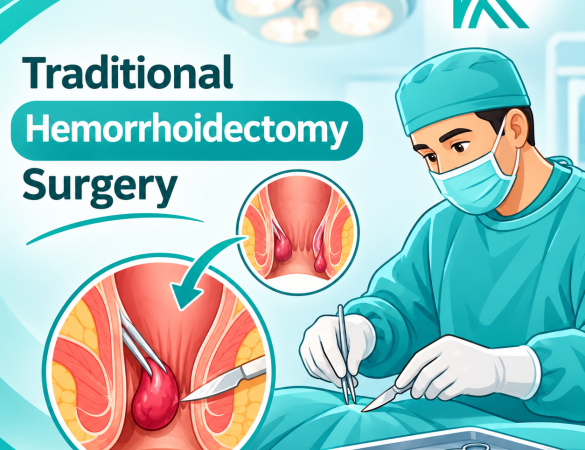


Many people suffer from hemorrhoids, a common condition that causes discomfort and sometimes pain. In most cases, hemorrhoids can be treated with natural or simple medical methods. However, when do hemorrhoids become serious? When symptoms worsen or lead to severe complications, immediate medical intervention becomes necessary.
Symptoms Indicating Serious Hemorrhoids
At first, the patient experiences itching or discomfort. However, some symptoms indicate that the condition may become more complicated. These symptoms include:
- Continuous bleeding during bowel movements.
- Severe pain that does not subside with traditional treatments.
- The appearance of hard lumps around the anal area.
- Persistent abnormal discharge or inflammation.
When Should You See a Doctor?
A doctor should be consulted if bleeding occurs frequently or if the pain becomes unbearable. If symptoms do not improve after using home treatments, seeking a specialist as soon as possible is the best option.
Potential Complications of Hemorrhoids
If hemorrhoids are not treated in time, they may lead to severe complications. Some of these include:
- Anemia: Due to continuous bleeding, the patient may suffer from iron deficiency, leading to general weakness and constant fatigue.
- Thrombosed Hemorrhoids: This occurs when blood collects inside the hemorrhoids, causing severe swelling and sharp pain.
- Infection: Inflamed hemorrhoids may develop into serious bacterial infections, especially if accompanied by abnormal discharge.
Hemorrhoid and Anal Disease Clinics in Dubai – Dr. Khaldoun Ghareb
When hemorrhoids become serious, finding specialized treatment is essential. Hemorrhoid and Anal Disease Clinics in Dubai – Dr. Khaldoun Ghareb offer advanced solutions that rely on the latest medical technologies. These clinics provide modern techniques such as laser treatment, which reduces pain and speeds up healing, along with non-surgical procedures that minimize recovery time.
Dr. Khaldoun Ghareb has extensive experience in treating hemorrhoids. He is known for his precise diagnosis and expertise in providing the most suitable treatment for each case. By utilizing modern techniques, Dr. Khaldoun ensures pain reduction and faster recovery without the need for complex surgical procedures.
For more information about Hemorrhoid and Anal Disease Clinics in Dubai – Dr. Khaldoun Ghareb, visit the clinic’s YouTube channel or the official website. Those who want to hear useful advice from Dr. Khaldoun Gharib can also follow his TikTok account.
Ways to Prevent Hemorrhoids from Worsening
- Eat fiber-rich foods to facilitate bowel movements.
- Drink sufficient amounts of water daily.
- Avoid sitting for long periods without movement.
- Exercise regularly.
Conclusion
When do hemorrhoids become serious? When symptoms worsen and start affecting daily life. Persistent bleeding, severe pain, and swelling are signs that require medical intervention. Therefore, these symptoms should never be ignored, and appropriate treatment should be sought as soon as possible. Choosing a specialized clinic like Hemorrhoid and Anal Disease Clinics in Dubai – Dr. Khaldoun Gharib ensures effective treatment using the latest medical technologies.