

Many people suffer from hemorrhoids and constantly search for effective and natural solutions. Therefore, hemorrhoids treatment with cupping therapy emerges as an attractive option for those who wish to avoid medications or surgical procedures. In this article, we explore the benefits of this treatment method and highlight its effectiveness based on numerous experiences and expert medical opinions.
What Is Cupping Therapy and How Does It Work?
Cupping therapy is one of the most well-known forms of prophetic and alternative medicine. It relies on removing stagnant or “spoiled” blood from the body. Specialized practitioners place cups on specific areas of the skin, then draw blood using mild suction. This process stimulates blood circulation and boosts the natural immune response.
How Cupping Therapy Affects Hemorrhoids
Several experts believe cupping therapy helps reduce venous congestion in the anal area, which plays a major role in the development of hemorrhoids. Moreover, cupping enhances blood flow and reduces inflammation, contributing to pain relief and reduced itching. Although some scientific studies have not confirmed absolute effectiveness, many patients reported significant improvement after a few sessions.
Types of Cupping Therapy Used for Hemorrhoids
1. Dry Cupping
This method uses suction without drawing blood. It is often applied to relieve pain and stimulate circulation.
2. Wet Cupping
This involves lightly cutting the skin and drawing blood. It is the most common method in hemorrhoids treatment with cupping therapy.
Benefits of Hemorrhoids Treatment with Cupping Compared to Other Methods
Compared to drug-based or surgical treatments, cupping is safer for mild and moderate hemorrhoids cases. It typically causes fewer side effects and naturally boosts the body’s resistance. Cupping is also a great option for patients who want to avoid chemical medications or invasive procedures. Furthermore, combining cupping with lifestyle changes can yield better outcomes, such as adopting a healthier diet or increasing physical activity.
Unlike surgical methods that may require long recovery periods and cause discomfort post-operation, cupping does not require significant downtime. Patients can repeat sessions when needed, giving them flexibility in managing symptoms and preventing recurrence.
However, choosing an experienced specialist remains essential. The effectiveness of cupping depends on accurate placement and the therapist’s expertise in treating such conditions.
Hemorrhoids and Anorectal Clinics in Dubai – Dr. Khaldoun Ghareb
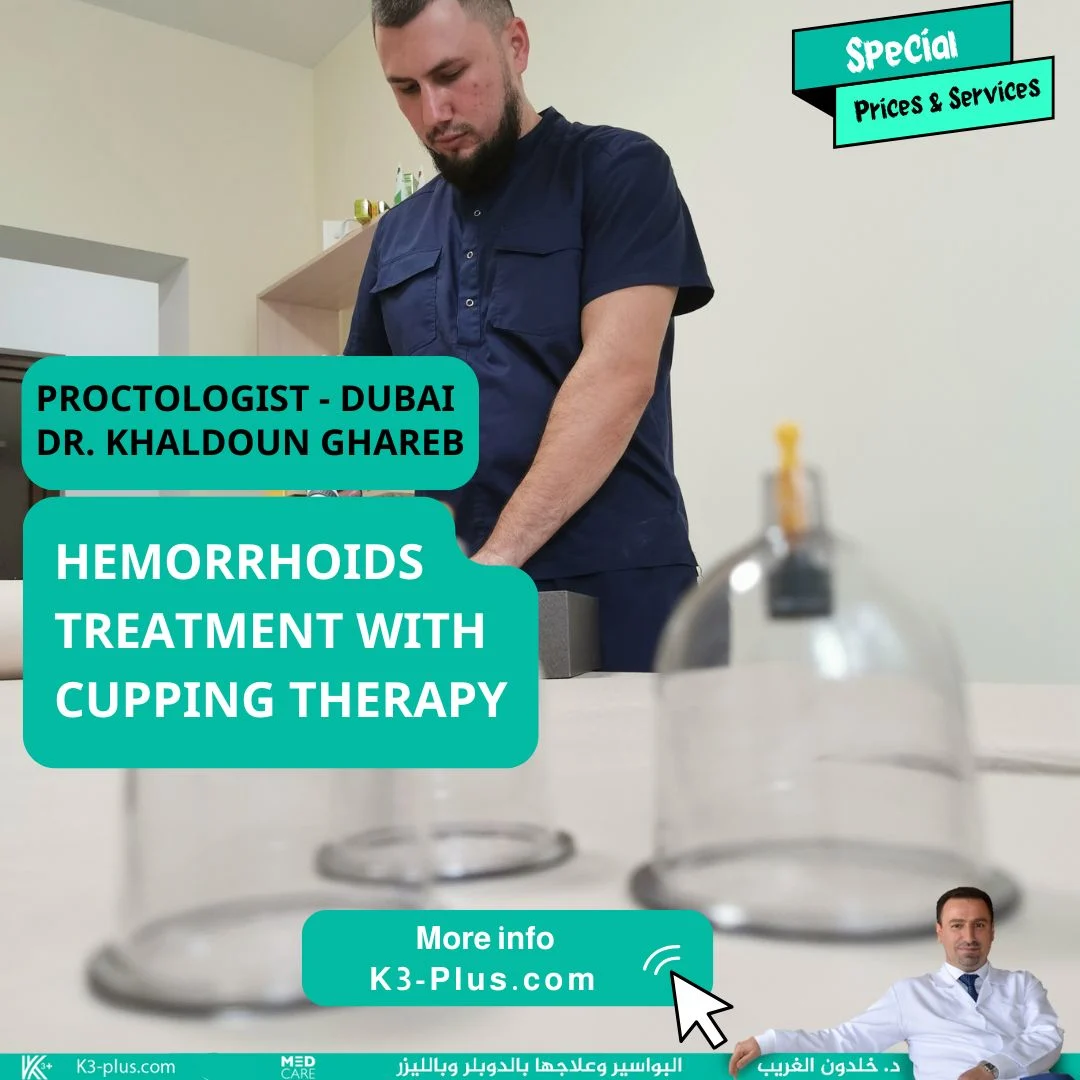
The hemorrhoids and anorectal clinics in Dubai led by Dr. Khaldoun Ghareb are among the most prominent centers offering effective treatments using the latest medical technologies. Dr. Khaldoun Ghareb brings extensive experience in general and rectal surgery and applies modern techniques such as laser therapy, injections, and Doppler-guided treatments to reduce bleeding and deliver impressive results.
These clinics offer comprehensive and successful solutions and also provide alternative options like hemorrhoids treatment with cupping therapy in selected cases. For more information about Dr. Khaldoun Ghareb’s hemorrhoid and anorectal clinics in Dubai, you may visit the clinic’s official website, the YouTube channel, or follow Dr. Ghareb’s advice on TikTok.
When Can Hemorrhoids Be Treated with Cupping?
This treatment suits individuals suffering from first- or second-degree hemorrhoids. These cases usually involve mild symptoms such as slight bleeding or discomfort during bowel movements, without persistent external protrusion. In such situations, cupping can serve as a supportive and effective approach to calm symptoms and promote healing.
On the other hand, advanced stages like third or fourth-degree hemorrhoids—where the tissue protrudes and does not retract easily—may not respond sufficiently to cupping alone. In those cases, combining cupping with other therapies such as topical medications or surgical intervention may be necessary.
It is also important to note that timing plays a significant role in treatment success. Starting cupping in the early stages improves the chances of rapid improvement. To ensure optimal results, a specialist must carefully assess the condition and determine whether cupping is the right choice or if a more specialized approach is needed.
Conclusion
In conclusion, hemorrhoids treatment with cupping therapy represents a promising and natural therapeutic option, especially in the early phases of the condition. Despite its advantages, consulting a physician remains essential to assess its suitability for each individual case.
Related articles