


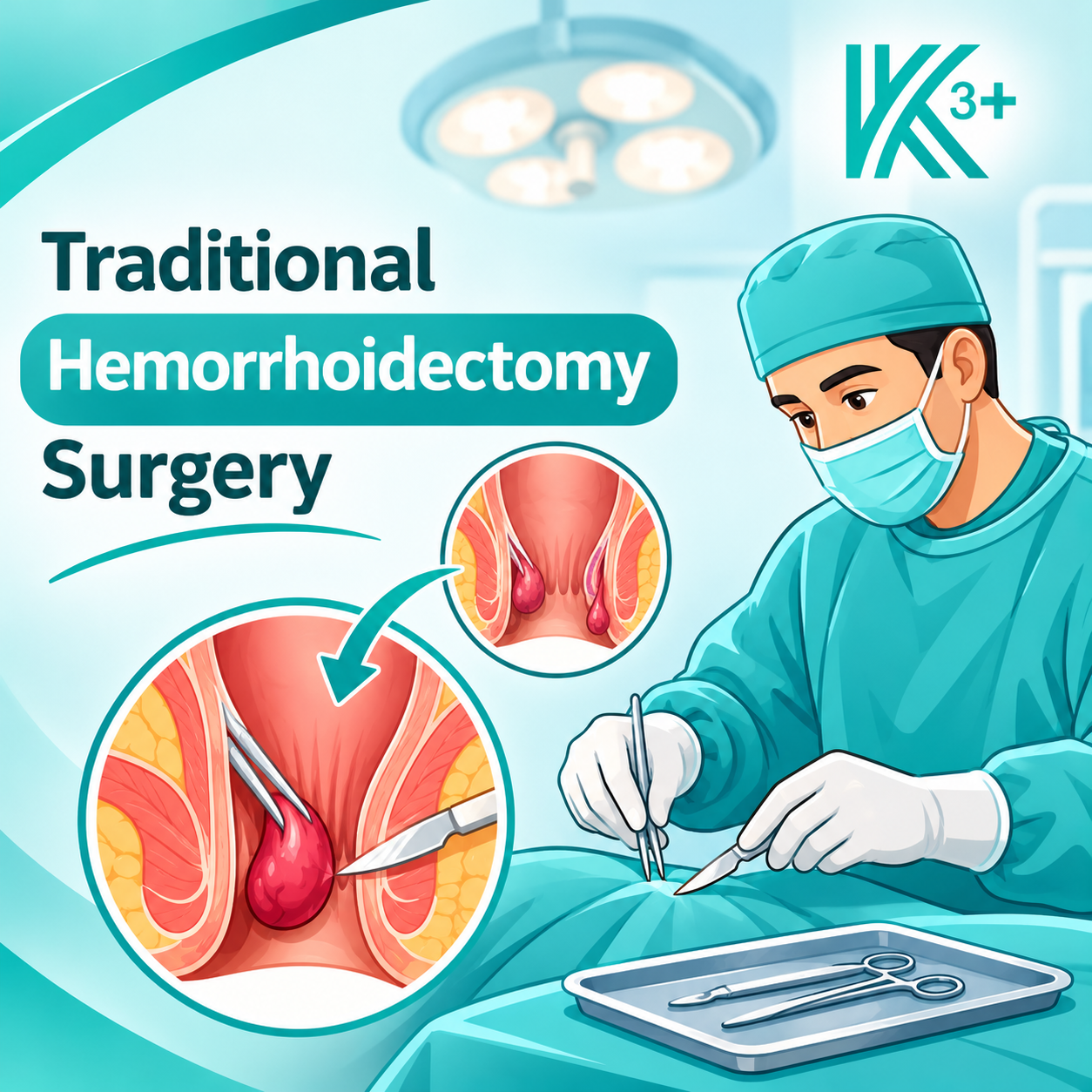
Hemorrhoids are common conditions affecting the blood vessels and supporting tissues inside and around the anal canal. They may cause bleeding, itching, pain, or tissue protrusion through the anus. Initially, many patients can manage their symptoms through dietary changes and improved daily habits. However, some advanced cases require surgical intervention. Traditional hemorrhoidectomy is an effective treatment option for removing hemorrhoidal tissue that causes persistent symptoms. Surgeons typically choose this procedure when conservative treatments fail to deliver the desired results. Additionally, they may recommend it for large external hemorrhoids or severe prolapse. Furthermore, surgical excision techniques vary according to the patient’s condition and the surgeon’s experience. Therefore, understanding the procedure, its risks, and the recovery period helps patients make informed treatment decisions. This article explores surgical indications, preparation, operative techniques, and expected outcomes.
When Do Doctors Recommend Traditional Hemorrhoidectomy?
Not all patients with hemorrhoids require surgical removal. Many cases improve with increased fiber intake, better bowel habits, and appropriate treatments. However, some patients continue experiencing symptoms despite these measures. In such cases, a colorectal surgeon evaluates hemorrhoid severity and its impact on daily life. The surgeon may recommend excision for advanced internal hemorrhoids, particularly symptomatic grade III and IV hemorrhoids. Additionally, surgery may be appropriate for mixed hemorrhoids involving large internal and external components. Furthermore, recurrent episodes of bleeding or prolapse may require consideration of more effective treatment options. Nevertheless, rectal bleeding does not always indicate hemorrhoids. Therefore, physicians investigate other possible causes before confirming the diagnosis. Ultimately, surgeons weigh symptom severity, surgical benefits, potential risks, and available alternatives before recommending treatment.
How Do Surgeons Perform Traditional Hemorrhoidectomy Step by Step?
The procedure involves removing enlarged hemorrhoidal tissue while preserving as much healthy tissue as possible. Initially, the anesthesiologist reviews the patient’s medical condition and selects appropriate anesthesia in consultation with the surgical team. Next, the surgeon identifies the hemorrhoidal areas requiring excision. The surgeon then carefully separates the affected tissue from the surrounding anal sphincter muscles. Additionally, the surgeon controls blood vessels to minimize bleeding during the procedure. Depending on the patient’s condition and the selected technique, the surgeon may use a scalpel, surgical scissors, or energy-based devices. In some approaches, the surgeon leaves the wounds open to heal gradually. In other techniques, the surgeon closes the wounds using appropriate sutures. Importantly, preserving bridges of skin and mucosal tissue between excision sites helps reduce the risk of anal canal narrowing. Finally, the surgeon examines the operative sites and confirms adequate bleeding control.
Traditional Hemorrhoidectomy vs. Laser Treatment and Modern Techniques
Hemorrhoid treatment techniques differ in their mechanisms, outcomes, and recovery periods. Traditional excisional surgery directly removes enlarged hemorrhoidal tissue. Therefore, it provides an effective option for certain large or advanced hemorrhoids. In contrast, some laser procedures deliver thermal energy into the tissue to reduce its size. However, these techniques do not suit every hemorrhoid grade. Other approaches include Doppler-guided hemorrhoidal artery ligation and stapled hemorrhoidopexy in selected cases. Some alternatives may reduce early postoperative pain or allow patients to resume normal activities sooner. Nevertheless, certain procedures carry a higher risk of symptom recurrence compared with surgical excision. Furthermore, laser treatment does not automatically mean better results or fewer risks. Therefore, surgeons select the technique according to hemorrhoid size, location, and degree of prolapse. They also consider available medical evidence, patient preferences, and their surgical experience.
Types of Open and Closed Hemorrhoidectomy
Surgeons commonly use two traditional excisional techniques: open and closed hemorrhoidectomy. During open hemorrhoidectomy, the surgeon removes hemorrhoidal tissue and leaves the wounds without complete closure. Medical professionals refer to this approach as the Milligan-Morgan technique. In contrast, closed hemorrhoidectomy involves suturing the wounds after removing the affected tissue. Surgeons call this approach the Ferguson technique. Closed hemorrhoidectomy may promote faster wound healing in certain cases. However, the choice of technique depends on hemorrhoid size, distribution, and tissue characteristics. Additionally, surgeons may use advanced vessel-sealing devices to control bleeding during excision. Nevertheless, these devices cannot replace precise surgical skills. Preserving healthy tissue between excision sites also remains essential. Therefore, surgeons determine the most appropriate technique after examining the patient and discussing the available treatment options.
Preparing for Hemorrhoid Surgery and Essential Medical Tests
Preoperative preparation begins with reviewing the patient’s medical history, medications, and previous allergies. Therefore, patients should inform their surgeon about heart disease, diabetes, and bleeding disorders. Additionally, they must disclose blood thinners, dietary supplements, and other medications. Patients should never discontinue any medication without clear medical instructions. Next, the physician performs an anorectal examination and determines whether additional tests are necessary. The physician may recommend a colonoscopy when symptoms or risk factors suggest the need to exclude other causes of bleeding. However, not every patient requires this examination before surgery. Furthermore, the anesthesia team provides fasting instructions according to the anesthetic technique and treatment plan. The surgeon may also request local bowel preparation in selected cases. Additionally, the medical team discusses postoperative pain management and wound care. Finally, arranging transportation and assistance at home helps ensure a safe return after surgery.
Pain After Hemorrhoid Surgery and How to Manage It
Pain after hemorrhoidectomy represents one of the main concerns for patients. The anal region contains sensitive nerve endings, and surgical wounds may cause significant discomfort. Pain commonly increases during bowel movements, particularly during the first few days. However, the medical team can reduce discomfort through a multimodal pain management plan. Physicians may recommend appropriate painkillers, warm sitz baths, and stool softeners. Additionally, dietary fiber and adequate fluid intake help reduce straining during bowel movements. Furthermore, fear of pain may cause some patients to delay using the toilet. Unfortunately, this behavior may worsen constipation and make subsequent bowel movements more difficult. Therefore, patients should follow medical instructions and maintain soft stools. They should also avoid taking pain medication without considering their medical conditions and other medications. Finally, unusually worsening pain requires medical evaluation to rule out complications.
Hemorrhoidectomy Recovery Time and Returning to Normal Activities
Recovery time varies according to the extent of tissue removal, surgical technique, and the patient’s overall health. In many cases, patients need several weeks before regaining their usual comfort. Some patients may return to office work after approximately two weeks. However, physically demanding jobs may require a longer recovery period. Additionally, discomfort during bowel movements may continue during the early stages of healing. Surgical wounds also need sufficient time to heal completely. Depending on the individual case, healing may take four to six weeks or longer. Therefore, surgeons determine when patients can return to work and exercise on an individual basis. Gentle movement also helps reduce inactivity and improve general well-being. Nevertheless, patients should avoid heavy lifting for the period their surgeon recommends. Finally, follow-up appointments allow physicians to assess wound healing and detect potential complications early.
Possible Complications After Hemorrhoid Surgery and When to Seek Medical Help
Hemorrhoidectomy provides effective treatment for appropriately selected patients. However, early or late complications may occur, as with any surgical procedure. Therefore, patients should recognize warning signs that require medical attention. The most important potential complications include:
-
Bleeding: Minor bleeding may occur, but heavy or persistent bleeding requires urgent medical evaluation.
-
Urinary retention: Some patients may experience difficulty urinating during the first few hours after surgery.
-
Severe pain: Uncontrolled pain may require medication adjustments or wound examination.
-
Infection: Fever or unusual discharge may indicate an infection requiring medical assessment.
-
Constipation: Hard stools may increase pain and delay comfort during recovery.
-
Anal stenosis: Excessive scarring or extensive tissue removal may rarely cause narrowing of the anal canal.
-
Fecal continence problems: Uncommon disturbances in bowel control may occur, particularly in patients with pre-existing risk factors.
Therefore, medical follow-up and adherence to postoperative instructions help detect problems early and reduce their impact.
Can Hemorrhoids Return After Surgery?
Surgical hemorrhoid removal provides long-lasting results for many patients. However, the procedure cannot guarantee that hemorrhoids will never return. New symptoms may develop if factors that increase pressure on anorectal tissues persist. Chronic constipation and repeated straining during bowel movements represent important contributing factors. Additionally, certain bowel evacuation disorders may contribute to persistent or recurrent symptoms. Therefore, patients should address the habits that contribute to hemorrhoids even after successful surgery. Consuming dietary fiber, drinking adequate fluids, and exercising regularly also help improve bowel regularity. Nevertheless, rectal bleeding after surgery does not necessarily indicate hemorrhoid recurrence. Anal fissures or other conditions may also cause bleeding and require examination. Therefore, patients should consult their physician when new symptoms appear. Ultimately, successful long-term outcomes combine appropriate surgery, ongoing prevention, and follow-up when necessary.
The Best Diet After Traditional Hemorrhoidectomy
Nutrition plays an important role in improving comfort during recovery. Therefore, physicians generally recommend maintaining soft stools that pass easily without straining. Patients can achieve this by gradually increasing dietary fiber intake. Suitable sources include vegetables, fruits, whole grains, and legumes. Additionally, drinking adequate fluids supports the effectiveness of dietary fiber. However, some patients may require fiber supplements or stool softeners according to their physician’s instructions. Furthermore, increasing fiber intake too quickly may cause bloating or gas. Therefore, patients should adjust their diet gradually according to individual tolerance. They should also avoid prolonged toilet sitting and excessive straining during bowel movements. Finally, regular meal schedules and gentle physical activity help improve bowel movements and reduce discomfort.
The Ideal Place to Undergo Traditional Hemorrhoidectomy
At Dr. Khaldoun Ghareb’s hemorrhoids and proctology clinics in Dubai, patients receive comprehensive medical care based on extensive experience and precise diagnosis. Dr. Khaldoun brings over 22 years of expertise in treating anorectal conditions, therefore he manages a wide range of cases with high efficiency. In addition, he has performed hundreds of successful procedures to treat hemorrhoids and fistulas without surgery, which reflects his advanced skills and reliance on modern treatment methods. He also focuses on providing comfortable solutions that reduce pain and accelerate recovery. On the other hand, patients can easily communicate with Dr. Khaldoun through multiple channels, so they can book appointments and receive consultations quickly and smoothly. As a result, patients feel confident from the first visit and receive accurate follow-up for their condition.
Moreover, modern technologies play a major role in advancing the level of treatment in these clinics. The clinics rely on Doppler technology to accurately identify blood vessels, which helps improve treatment outcomes. In addition, the VAAFT technique provides effective solutions for fistula treatment using advanced, minimally invasive methods. Furthermore, laser therapy helps reduce pain and speeds up the healing process. On the other hand, endoscopy supports precise diagnosis, while catheter-based techniques enable safe and targeted procedures. Therefore, these technologies ensure better results with shorter recovery time, giving patients a comfortable and effective treatment experience.
For more information about Hemorrhoid and Proctology Clinics in Dubai – Dr. Khaldoun Ghareb, you can visit the clinic’s channel on YouTube or the official website. Additionally, those who wish to hear useful tips from Dr. Khaldoun Ghareb can follow his account on TikTok.
Conclusion: When Is Traditional Hemorrhoidectomy the Best Treatment Option?
Hemorrhoidectomy represents an important treatment option for patients with advanced hemorrhoids or persistent symptoms. However, not every patient requires surgical intervention. Instead, the decision depends on hemorrhoid severity, symptom characteristics, and the response to other treatments. Therefore, patients should undergo a specialist evaluation before selecting the appropriate technique. Understanding the differences between traditional excision and modern procedures also helps establish realistic expectations. Furthermore, patients should recognize that recovery may take several weeks. Pain management, dietary adjustments, and medical follow-up may require daily attention during this period. Additionally, treating constipation and avoiding excessive straining help reduce the likelihood of future symptom recurrence. Finally, choosing a qualified surgeon and following medical instructions improve the chances of achieving favorable results. The primary treatment goal remains relieving symptoms, improving quality of life, minimizing risks, and preserving normal anal canal function.