

Hemorrhoids and surgical treatment are topics that concern many individuals. Hemorrhoids are a common health issue that can significantly affect a patient’s quality of life. While home remedies may be effective in some cases, surgical intervention becomes necessary when other treatments fail. Therefore, this article will discuss the available surgical procedures, their benefits, and possible complications.
What Are Hemorrhoids?
Hemorrhoids are swollen veins in the rectal and anal area. They develop due to excessive pressure on these veins, causing them to expand and swell. Hemorrhoids can be internal or external, and the severity of the condition depends on their size and associated symptoms.
When Is Surgical Treatment Necessary?
Surgical treatment becomes essential when medications and lifestyle changes fail to relieve symptoms. Some cases require urgent surgical intervention, especially if there is persistent bleeding, painful blood clots, or prolapsed hemorrhoids that cannot return inside naturally.
Types of Surgery for Hemorrhoids
Several surgical methods are available for treating hemorrhoids. The choice of procedure depends on the patient’s condition and the severity of the hemorrhoids. These procedures include:
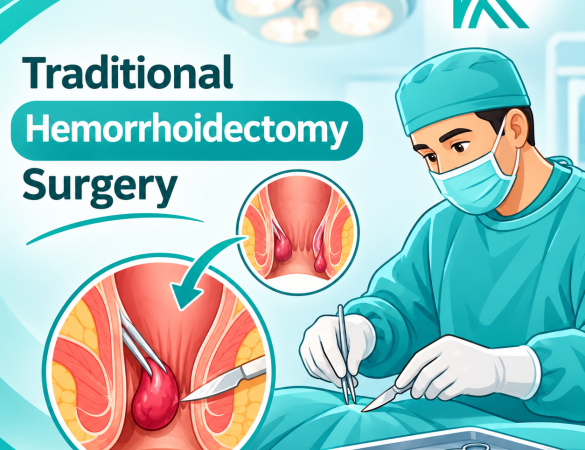
1. Traditional Hemorrhoidectomy
This procedure involves the complete removal of hemorrhoids using a surgical scalpel or laser. It is highly effective but requires a relatively longer recovery period.
2. Rubber Band Ligation
This technique is used for internal hemorrhoids. A rubber band is placed around the base of the hemorrhoid, cutting off its blood supply. Within a few days, the hemorrhoid dries up and falls off.
3. Hemorrhoid Stapling
This method causes less pain compared to traditional hemorrhoidectomy. A specialized device is used to reposition the prolapsed tissue back inside the rectum.
4. Laser Treatment
Laser treatment is a modern technique that minimizes pain and accelerates healing. It uses laser energy to shrink the hemorrhoids gradually.
Recovery Period After Surgery
The recovery period depends on the type of surgery performed. It may range from a few days to several weeks. Patients are advised to follow their doctor’s instructions, including consuming fiber, drinking plenty of water, and maintaining proper hygiene to avoid complications.
Hemorrhoid Clinics and Anal Disease Treatment in Dubai – Dr. Khaldoun Ghareb
For those seeking the best medical centers specializing in hemorrhoid treatment, Hemorrhoid Clinics and Anal Disease Treatment in Dubai – Dr. Khaldoun Ghareb are an excellent choice. These clinics utilize the latest medical technologies, including laser and non-surgical techniques, ensuring effective and safe treatments with minimal pain and a faster recovery period. Dr. Khaldoun Ghareb has extensive experience in this field, successfully treating numerous patients with advanced medical techniques.
For more details about Hemorrhoid Clinics and Anal Disease Treatment in Dubai – Dr. Khaldoun Ghareb, you can visit the clinic’s YouTube channel or the official website. Additionally, those interested in useful medical advice from Dr. Khaldoun Ghareb can follow his account on TikTok.
Conclusion
Hemorrhoids and surgical treatment play a crucial role in rectal and anal health. Various modern treatment options ensure effective results. When surgical intervention is necessary, consulting a specialist is recommended to determine the best treatment approach based on the patient’s condition.