





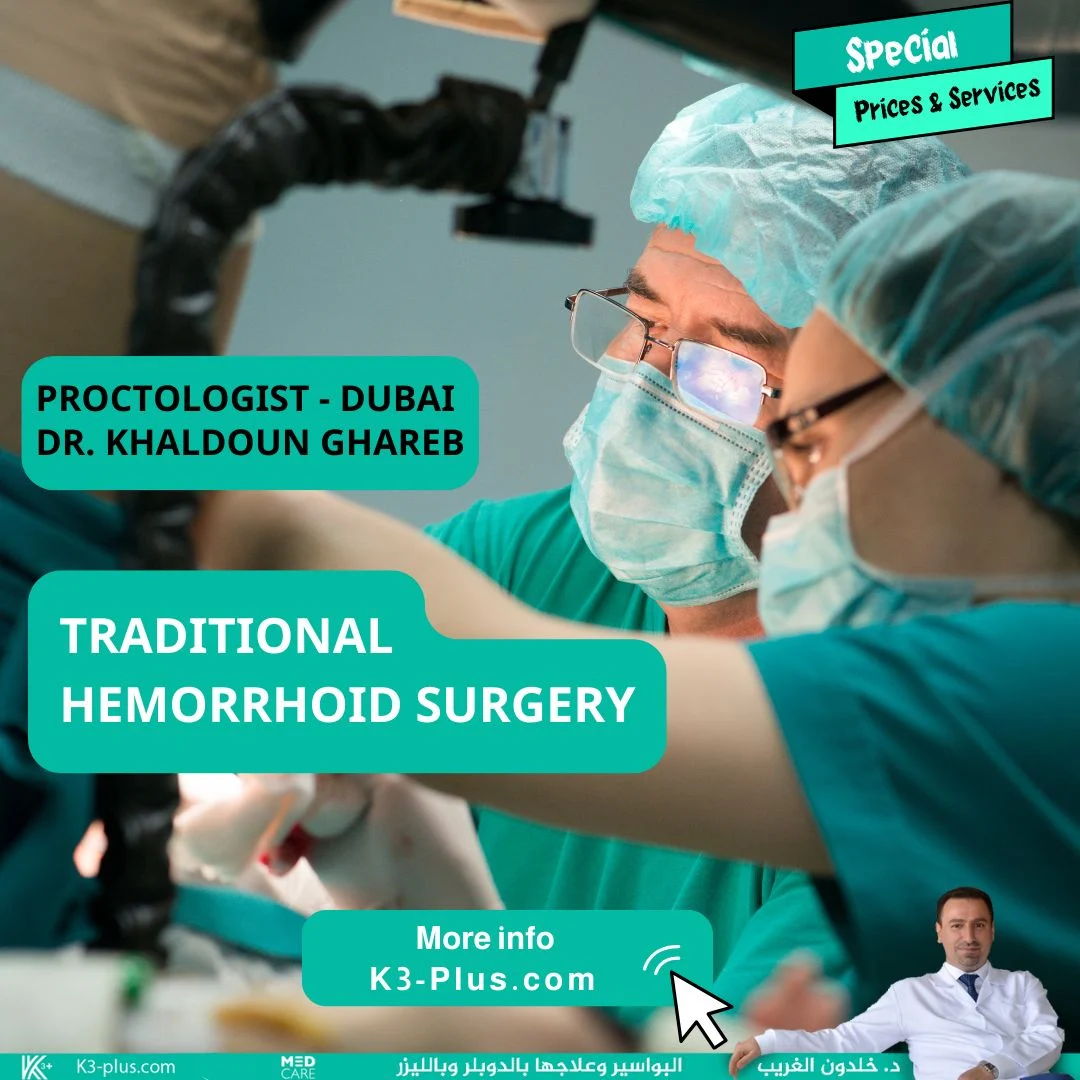
Traditional hemorrhoid surgery is a fundamental treatment option for advanced cases. Surgeons resort to this procedure when conservative or less invasive treatments fail. In this article, we will explore the details of this surgery. Furthermore, we will discuss the reasons for performing it and its key steps. Additionally, we will cover the recovery period and potential complications.
Understanding Traditional Hemorrhoid Surgery
Traditional hemorrhoid surgery, also known as a hemorrhoidectomy, is a major surgical operation. This procedure aims to permanently remove the enlarged and painful hemorrhoidal tissue. Moreover, surgeons excise the excess blood vessels in the area. This surgery often leaves behind open wounds that heal gradually.
Reasons Leading to Surgery
Doctors recommend this surgery in several specific cases. First, hemorrhoids may be very large in size. Second, treatment with rubber band ligation or injections might fail. Third, a patient can suffer from severe and continuous bleeding. Finally, prolapsed hemorrhoids extending outside the anal opening are a primary reason.
Steps of Performing Traditional Surgery
-
Complete anesthesia for the patient.
-
Identifying the locations of the hemorrhoids to be removed.
-
Performing the surgical incision around the affected tissue.
-
Ligating the blood vessel supplying the hemorrhoid.
-
Complete excision of the hemorrhoidal tissue.
-
Closing the wound or leaving it open to heal.
Recovery Period After the Procedure
The recovery period requires strict adherence to the doctor’s instructions. The patient experiences post-operative pain, which painkillers can control. Doctors also typically advise taking warm sitz baths several times a day. In addition, following a diet rich in fiber is essential to avoid constipation. Usually, the patient returns to normal activities within two to four weeks.
Hemorrhoid and Anal Disorder Clinics in Dubai: Dr. Khaldoun Ghareb
Although traditional hemorrhoid surgery remains an effective solution, medical progress offers many alternatives. In this context, the hemorrhoid and anal disorder clinics in Dubai under the supervision of Dr. Khaldoun Ghareb stand out as a specialized reference. These clinics provide accurate diagnosis and a comprehensive treatment plan tailored to each individual case.
Dr. Khaldoun Ghareb’s clinic is distinguished by its use of the latest global technologies for treating hemorrhoids. It does not rely solely on traditional hemorrhoid surgery. Instead, it also offers minimally invasive treatments such as Doppler-guided hemorrhoid artery ligation, stapled hemorrhoidopexy, injection sclerotherapy, and laser technology. These modern techniques aim to significantly reduce pain and shorten the recovery period.
The success of these clinics is attributed to the extensive experience and surgical skill of Dr. Khaldoun Ghareb himself. The doctor possesses many years of focused practice in diagnosing and treating all complex and simple hemorrhoid cases. He also continuously strives to develop his skills to keep pace with the latest treatment methods. This combination of experience and advanced technology ensures patients achieve the best possible outcomes.
For more information about hemorrhoid and anal disorder clinics in Dubai with Dr. Khaldoun Ghareb, you can visit the clinic’s channel on the YouTube or visit the official website online. Also, those who wish to listen to the useful advice provided by Dr. Khaldoun Ghareb can follow the doctor’s account on the TikTok app.
Differences Between Traditional Surgery and Modern Techniques
There are several fundamental differences between traditional hemorrhoid surgery and newer treatment technologies. We can summarize these differences in the following points:
First: Level of Pain After the Procedure
Traditional hemorrhoid surgery causes severe pain after the anesthesia wears off, due to the nature of the open wounds and the extent of surgical intervention.
In contrast, modern techniques like laser and Doppler ligation result in very minor pain, often controllable with mild pain relievers.
Second: Recovery Duration and Return to Normal Life
Traditional hemorrhoid surgery requires a longer recovery time, potentially extending from two to four weeks before returning to usual activities.
Meanwhile, patients undergoing new techniques return to their normal lives very quickly, often within a few days or even the next day.
Third: Extent of Surgical Intervention and Complications
Traditional hemorrhoid surgery is considered a major operation, which increases the likelihood of complications like bleeding or infection.
On the other hand, modern techniques are minimally invasive, performed through small openings, greatly reducing the rate of risks and complications.
Fourth: Technique Used and Healing Method
In traditional hemorrhoid surgery, the surgeon excises the diseased tissue, often leaving wounds open to heal gradually on their own.
Modern techniques, however, rely on methods like laser ablation of excess blood vessels or cutting off their blood supply, allowing the body to absorb them without large open wounds.
Fifth: Need for Hospital Stay
Traditional hemorrhoid surgery often necessitates a hospital stay for one night or more for post-operative monitoring.
In comparison, most modern procedures are performed in outpatient clinics, where the patient leaves for home on the same day.
Risks of Traditional Surgery
Like any surgical operation, this surgery carries some risks. For instance, the patient may experience bleeding or infection at the wound site. Also, some patients suffer from temporary difficulty controlling bowel movements. Furthermore, anal stenosis may occur in rare cases. Therefore, discussing all these possibilities with the specialist surgeon is essential before proceeding with the operation.
Conclusion
In summary, traditional hemorrhoid surgery remains a powerful and well-established surgical solution. It is particularly suitable for severe and advanced cases. However, each case must be evaluated individually to choose the optimal treatment. Consulting a specialized doctor like Dr. Khaldoun Ghareb also provides a deeper understanding of the available options. Finally, continuous medical development helps offer more comfortable and effective treatments for patients.
